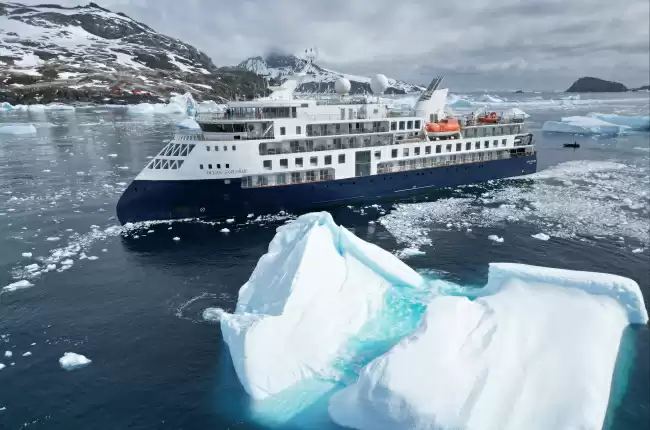
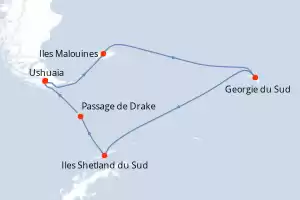
Itinerary : Ushuaia, Falkland Islands, South Georgia, South Shetland Islands, Drake passage, Ushuaia


2 other departures
Ocean Explorer
20 d
Suite
Ushuaia
10/25/2026
from
US$ 43,337
Other departures:
14 Feb 2028
02 Feb 2029

1 cruises found
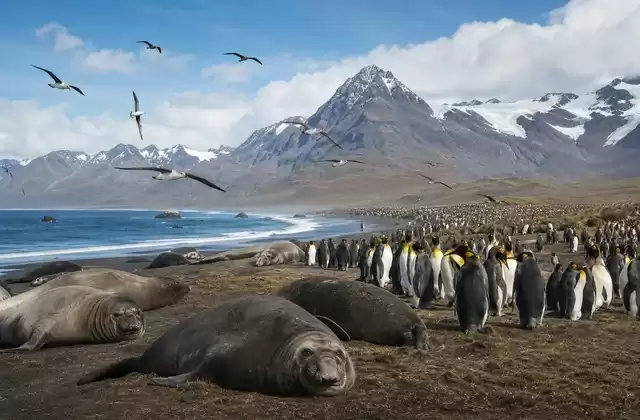
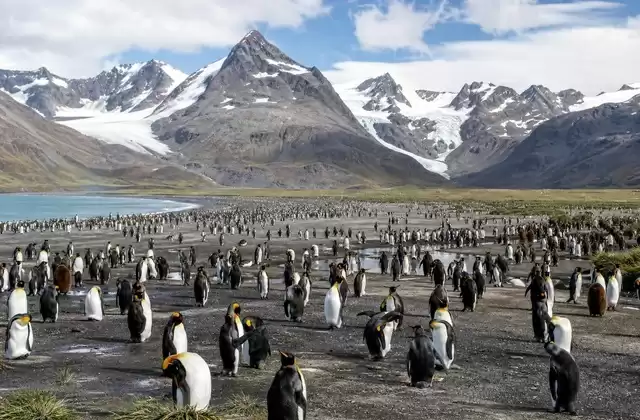
A cruise to South Georgia and the South Sandwich Islands is nothing like a conventional cruise. Travelers come to explore one of the South Atlantic's great wildlife sanctuaries, with king penguin colonies, beaches crowded with elephant seals, snow-covered peaks, former whaling stations, and long ocean passages.
South Georgia accounts for most landings, while visits to the far more remote South Sandwich Islands are rare and highly dependent on sea conditions. This is a demanding, spectacular, and carefully managed expedition destination where wildlife, weather, and the ship's pace truly dictate the journey.
Your search criteria:
South Georgia and the South Sandwich Islands
Itinerary : Ushuaia, Falkland Islands, South Georgia, South Shetland Islands, Drake passage, Ushuaia


2 other departures
Ocean Explorer
20 d
Suite
Ushuaia
10/25/2026
from
US$ 43,337
Other departures:
14 Feb 2028
02 Feb 2029
| Season | Weather & conditions | Expert advice |
|---|---|---|
January and December | Long days and highly active colonies. King penguins and other species are abundant, chicks may be seen depending on the site, and sailing conditions are generally more favorable. | Often the most popular period for a first South Georgia expedition, with a good balance of wildlife, daylight, and potential landing opportunities. |
February - March | Wildlife remains abundant as the breeding cycle advances. Young animals are more visible, the colonies remain impressive, and the light can become softer. | Good time for photographers and travellers who want to observe varied behaviors, with always unpredictable weather. |
April - September | Extremely difficult conditions and virtually no cruise offerings. The austral winter makes sailing more challenging, with cold temperatures, rough seas, short days, and very limited access. | For an expedition cruise, plan for the austral season from October through March, choosing your dates according to your wildlife and daylight priorities. |
October - November A truly wild atmosphere and subantarctic light. Snow may still cover the landscape, elephant seals are highly active, and penguin colonies begin to take shape. A wonderful time for travelers drawn to snowier landscapes, intense seal activity, and a strong sense of expedition. | ||
Here, hotspots are not items on a checklist but fragile natural sites whose accessibility depends on conditions. Every landing follows a strict protocol to protect wildlife, soil, and colonies.

Salisbury Plain
the colony's immensity and mountain backdrop make this one of South Georgia's defining experiences.

St Andrews Bay
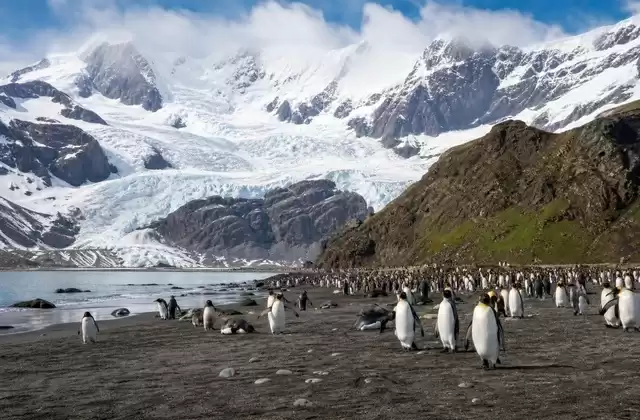
the concentrations of king penguins and elephant seals create a sense of wildlife everywhere.

In Fortuna Bay
wildlife, glaciers, and Shackleton's story come together at this remarkably varied site.

In Grytviken
the former whaling station recalls the island's industrial history and changing attitudes toward marine wildlife.

Shackleton Cemetery
the place gives a human and almost intimate dimension to this immense destination.

South Georgia Museum
the exhibits help explain the archipelago's conservation, research, and history.

Gold Harbour
glaciers, dark beaches, and concentrated wildlife create one of the journey's most powerful landscapes.

In Drygalski Fjord
steep mountains, cold water, and changing light make for spectacular cruising.

Around the South Sandwich Islands
the archipelago's volcanic silhouettes and isolation offer rare views whenever conditions allow an approach.

Cooper Bay
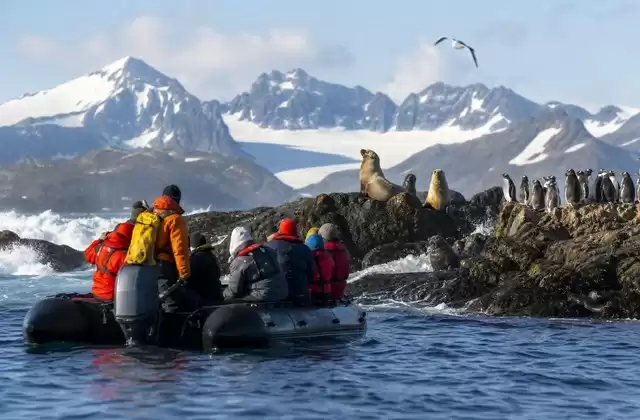
Zodiac outings may offer views of penguins, albatrosses, fur seals, and cliffs from the water.

In the bays of South Georgia
elephant seals, fur seals, penguins, and seabirds create an exceptional concentration of wildlife.

On the major crossings
albatrosses, petrels, and changing seas are an integral part of the experience, even between landings.
Walk among South Georgia's king penguin colonies
Travelers often remember this as the journey's most powerful moment. At Salisbury Plain, St Andrews Bay, or Fortuna Bay, the sounds, movement, and scale of the colonies create a feeling of wildlife all around, always within a strictly managed setting.
Linking Grytviken to Shackleton's Story
Grytviken provides a historical pause amid sweeping natural landscapes. Travelers value seeing the former whaling station, museum, and Shackleton's grave because these places add human depth to a destination dominated by wildlife and the sea.
Cruise among glaciers, dark bays, and subantarctic mountains
South Georgia is as impressive from the ship as it is during landings. Travelers love hours spent cruising its bays, facing glaciers and steep peaks while seabirds follow the vessel.
See Gold Harbour come alive at dawn
Gold Harbour stays with travelers because so much converges in one scene: penguins, elephant seals, glaciers, and changing light. When conditions allow an early landing, the site takes on remarkable intensity.
Explore Cooper Bay by Zodiac for a different view of the coast
Cooper Bay appeals because wildlife is often observed from the water, offering a different perspective on the cliffs and animals. Travelers enjoy this more mobile approach, which varies the viewpoints without adding foot traffic to fragile ground.
Watch for the volcanic silhouettes of the South Sandwich Islands
The South Sandwich Islands remain a much rarer and less predictable part of the journey. When an itinerary can approach them, travelers chiefly remember the isolation, volcanic landforms, and feeling of being in one of the South Atlantic's least accessible regions.
The only way to get to South Georgia Island is by boat. You'll need to be an avid sailor, as you'll need between 4 and 6 days to get there; and above all, you'll need to love adventure, as the expeditions are long but very rewarding. Your first stop on the island must be Grytviken, where you can visit a small church where the island's first shepherd officiated, and a museum preserving the abandoned relics of bygone industries. In the same town of Grytviken, the grave of the great Ernest Shackleton is a favorite spot for tourists in search of exploration. To meet the island's friendly population, visit the King Edward Point scientific research center, just a few metres from the old seaside resort of Grytviken. The only residents of the island can be seen there, as well as on the Bird Island scientific base in north-western South Georgia. But what's most interesting about the island itself is its animal heritage, which is one of the most extensive in the world. You can admire a vast colony of king penguins at Salisbury Plain. You can also discover lands inhabited by fur seals and elephant seals during your zodiac rides.
In Stromness Bay and St. Andrew's Bay, reindeer have been visible since the 20th century. Off Prion Island, take out your camera to capture howling albatrosses perched on their nests. You'll also discover some thirty species of bird, including numerous Adélie, Papuan and chinstrap penguins; black-browed albatrosses; sharp-tailed ducks and spotted teal. All this biodiversity is preserved within a 200 nautical mile zone.
South Georgia has a maritime subpolar climate, meaning that the temperature in the hottest month, February, is 6.5°C in its largest city. Winter is cold in June and July, with temperatures hovering around freezing. From November to March, temperatures can reach 20 to 22°C. The best time to visit South Georgia is during the austral summer from December to March, especially between January and March when temperatures are much higher. Despite some precipitation, windy spells and the risk of rain, the island's charm remains. Between the waves crashing on the fjords and the animals lining its shores, your trip will be spent in the best possible conditions. In winter, however, from June to August, you'll need warm clothing such as down jackets, hats, raincoats and even snow boots. During the summer months, from December to March, you'll want to pack warm clothes, a sweater, jacket and boots. This will come in very handy, especially when hiking in the mountains.